
What Is a Fractional CMO, and When Does a Growing Company Need One?

Written by Dario Hudon-Verrelli
Marketing Strategy Consultant & Fractional CMO | Former Marketing Instructor, Mount Royal University
Synopsis
A fractional CMO is one of those titles that sounds like jargon and turns out to be simple. It is a senior marketing leader who works for you part of the time, owns the marketing decisions, and costs a fraction of a full-time hire. For a company with 20 to 100 employees, it is often the missing piece that no freelancer, agency, or junior hire can supply.
This post explains what a fractional CMO actually is, the specific problem the role solves, and the honest signs that tell you a growing company is ready for one.
What a Fractional CMO Actually Is
A fractional CMO is a chief marketing officer you share. Instead of hiring one senior leader full time at a full-time salary, you bring in an experienced one for a set slice of their week, on an ongoing basis. The word fractional just means part of a whole: you get a fraction of a CMO’s time, and you get all of a CMO’s judgement.
The distinction that matters is not hours, it is level. A freelancer writes the posts. A marketing manager runs the calendar. A fractional CMO decides what the marketing is trying to do in the first place, who it is for, and how you will know it is working. It is a strategy seat, filled by someone senior, without the cost of filling it full time.
The Problem It Actually Solves
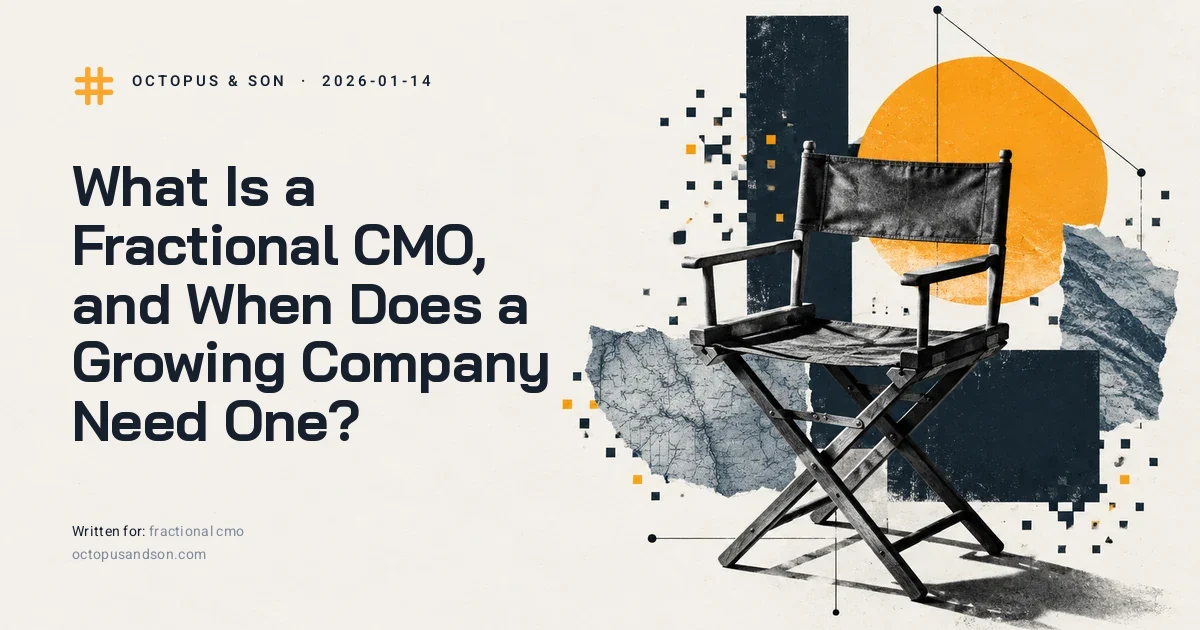
Here is the situation almost every growing company lands in. You have people who can do the work. Someone writes, someone posts, maybe an agency runs the ads. What you do not have is anyone whose job is to decide whether any of it is the right thing to be doing. The chair at the head of the marketing table is empty.
That empty chair is expensive in a quiet way. Without it, marketing becomes a pile of activity with no one accountable for the result. Campaigns get made because it is someone’s turn to make one, not because they serve a decision anybody made on purpose. This is the same root cause behind why most marketing fails before the first post goes out: plenty of doing, no one deciding. A fractional CMO is the person who finally sits in the chair.
When a Growing Company Actually Needs One
You do not need a fractional CMO because it sounds impressive. You need one when specific things are true. If you recognise two or three of these, the chair is empty and it is costing you.
- You are spending real money on marketing but cannot say what it is supposed to achieve this quarter.
- You have people doing the work and no one senior deciding what the work should be.
- The owner is the de facto head of marketing, in the gaps between everything else they run.
- You are about to hire a full-time marketing leader and are not yet sure what you would even ask them to do.
You do not need a fractional CMO to do more marketing. You need one when there is plenty of marketing being done and no one whose job is to decide whether it is the right marketing.
How to Bring One In
If that sounds like you, the way in is smaller than a hire.
- Name the decision you are missing. Not the tasks. The unanswered question, usually who you are for and what you promise them.
- Start with the foundation, not a campaign. A good fractional CMO fixes the strategy before touching the output. If they lead with tactics, keep looking.
- Agree how you will measure it. One leading number, checked monthly, so the value of the seat is visible.
- Keep your doers. The point is not to replace your writer or your agency. It is to give them someone deciding what to point them at.
That is the whole role: senior judgement, part time, owning the decision your marketing has been missing. If you want to see what a fractional CMO would sort out first, it is almost always the Marketing Foundation, starting with who your marketing is actually for. Octopus & Son offers this as a fractional CMO engagement built for companies your size.
FAQ
A fractional CMO is a chief marketing officer you share. Rather than hiring one senior leader full time, you bring in an experienced one for a set slice of their week on an ongoing basis. You get a fraction of their time and all of their judgement: someone senior who owns the marketing decisions rather than just doing the tasks.
The difference is level, not hours. A freelancer writes the posts and a marketing manager runs the calendar. A fractional CMO decides what the marketing is for, who it is aimed at, and how you will know it is working. It is a strategy seat filled by someone senior, without the cost of filling it full time.
When specific things are true: you are spending on marketing without a clear goal for the quarter, you have people doing the work but no one senior deciding what the work should be, or the owner has become the head of marketing by default. If two or three of those ring true, the strategy chair is empty and it is costing you.
A fractional CMO costs a fraction of a full-time chief marketing officer’s salary, because you are paying for part of their week rather than all of it. For a company with 20 to 100 employees, it is usually the way to get senior marketing judgement at a stage when a full-time executive salary would not yet be justified.
In maintaining the ethics and transparency of AI use, we leveraged AI tools to enhance the insights shared here in this article. Learn more about Why the Ethical use of AI is Important to Your Business.