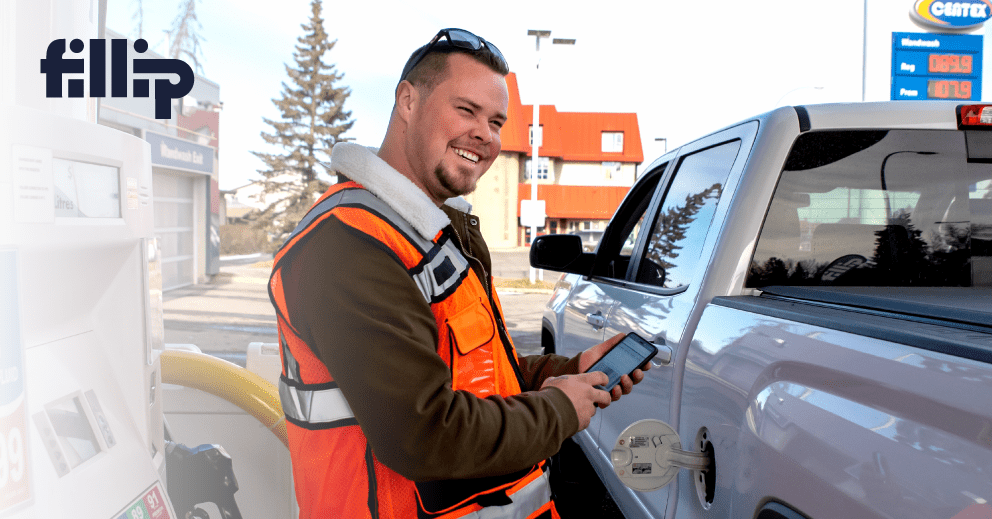
Blue collar
Saving money was the value that moved them. The ad said so plainly, and it ran against the postal codes where they fill up.

434 users in 30 days on a $2,000 budget, at roughly $4.60 each

The objective
The challenge in user acquisition changes from one project to the next. Sometimes the audience is the barrier, sometimes the budget is. For Fillip neither was. What mattered was the specific place each audience was standing when the app would be useful to them, which is at a pump.
So the campaign aimed at geography as closely as it aimed at people, and the creative legitimised the app by showing the barrier it removes and how little work it takes to use.
The audiences
Saving money was the value that moved them. The ad said so plainly, and it ran against the postal codes where they fill up.

Convenience, not savings. The call to action dropped every reference to money and spoke to the time the app gives back.
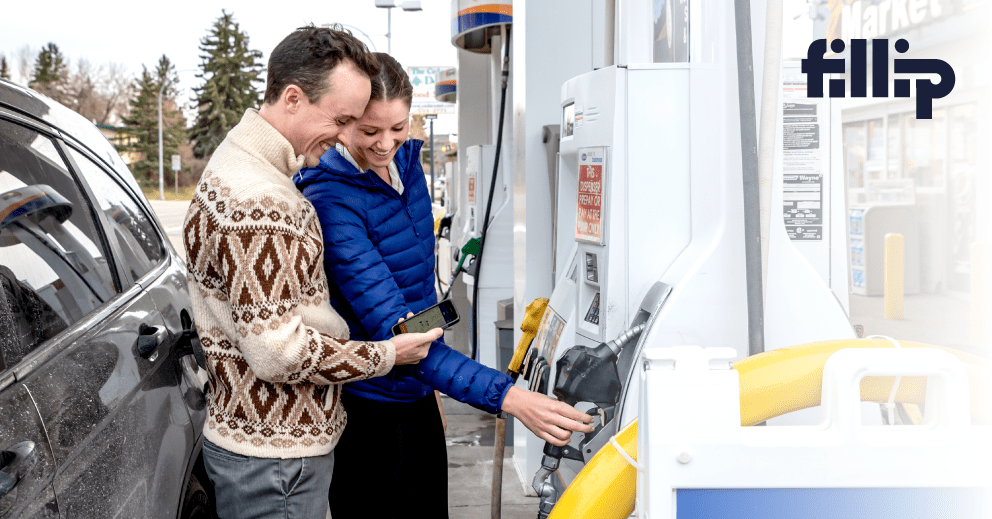
Convenience again, read as one less thing to think about. Each segment was split by gender as well, which set how the ad spoke.
The approach
The result
434users acquired
Against a goal of 400, inside the 30 days.
$4.60per user
Across 434 users on a $2,000 budget.
2,708clicks
Traffic was the first objective, since the app had to do the convincing itself.
30days
On a $2,000 budget for the month, with nothing held in reserve.
Understanding the audience, their values and their barriers was what carried this campaign, which mattered more because the window was only thirty days.
The same segmentation is where a Marketing Foundation starts, and it is what every campaign after it is built on.
The curious questions
To acquire 400 new app users before the end of Q4 2019, on a $2,000 monthly budget over 30 days, so driving qualified traffic was the primary objective.
By segmenting the audience into blue collar, white collar and couples, then geo-locating gas stations by postal code and matching each ad to the right region.
It acquired 434 users in 30 days at roughly $4.60 per user, on a $2,000 budget.
Understanding each audience's values and barriers: blue-collar users responded to saving money, while couples and white-collar users responded to convenience, so the call to action changed by segment.
We use analytics to see which pages help. With your OK, we also use advertising cookies from Google and Meta. Privacy policy