Synopsis
Ideal customer profile vs buyer persona is one of those debates that sounds academic until you are on a sales call and the words you prepared do not fit the person in front of you. Both are ways of describing who you sell to. They are not the same thing, and only one of them reliably helps you close.
This post explains what each one actually is, why buyer personas so often end up on a poster while ideal customer profiles end up in sales calls, and how to build a one-page B2B ideal customer profile from customers you already have.
What a Buyer Persona Actually Is
A buyer persona is a semi-fictional character that stands in for a type of customer. You give it a name, an age, a job title, a photo, a few frustrations, and a short day-in-the-life. Marketing teams have used personas for years as a shared shorthand, a way for everyone to picture the same reader before they write.
Used that way, a persona is genuinely useful. It keeps a team from writing for everyone and no one. The trouble starts when the persona is invented rather than observed. Most personas lean heavily on demographics, which are easy to make up and comfortable to agree on, and light on the one thing that actually predicts a sale: what the buyer was trying to fix, and why they moved when they did.
What an Ideal Customer Profile Actually Is
An ideal customer profile, or ICP, is an evidence-based description of your best-fit buyer, built from the customers who have actually paid you. In business-to-business, it usually describes two things at once: the kind of company that is a good fit, and the person inside it who feels the problem and signs for the fix.
The difference is not the format. It is what the profile is made of. A persona is mostly who someone is. An ideal customer profile is mostly why they buy: the trigger that made them start looking, the problem in their own words, who else is involved in the decision, and what finally made them trust you over the alternative. That is decision psychology, and it is the part a demographic sketch leaves out.
Why One Ends Up on a Poster and the Other Ends Up in a Sales Call
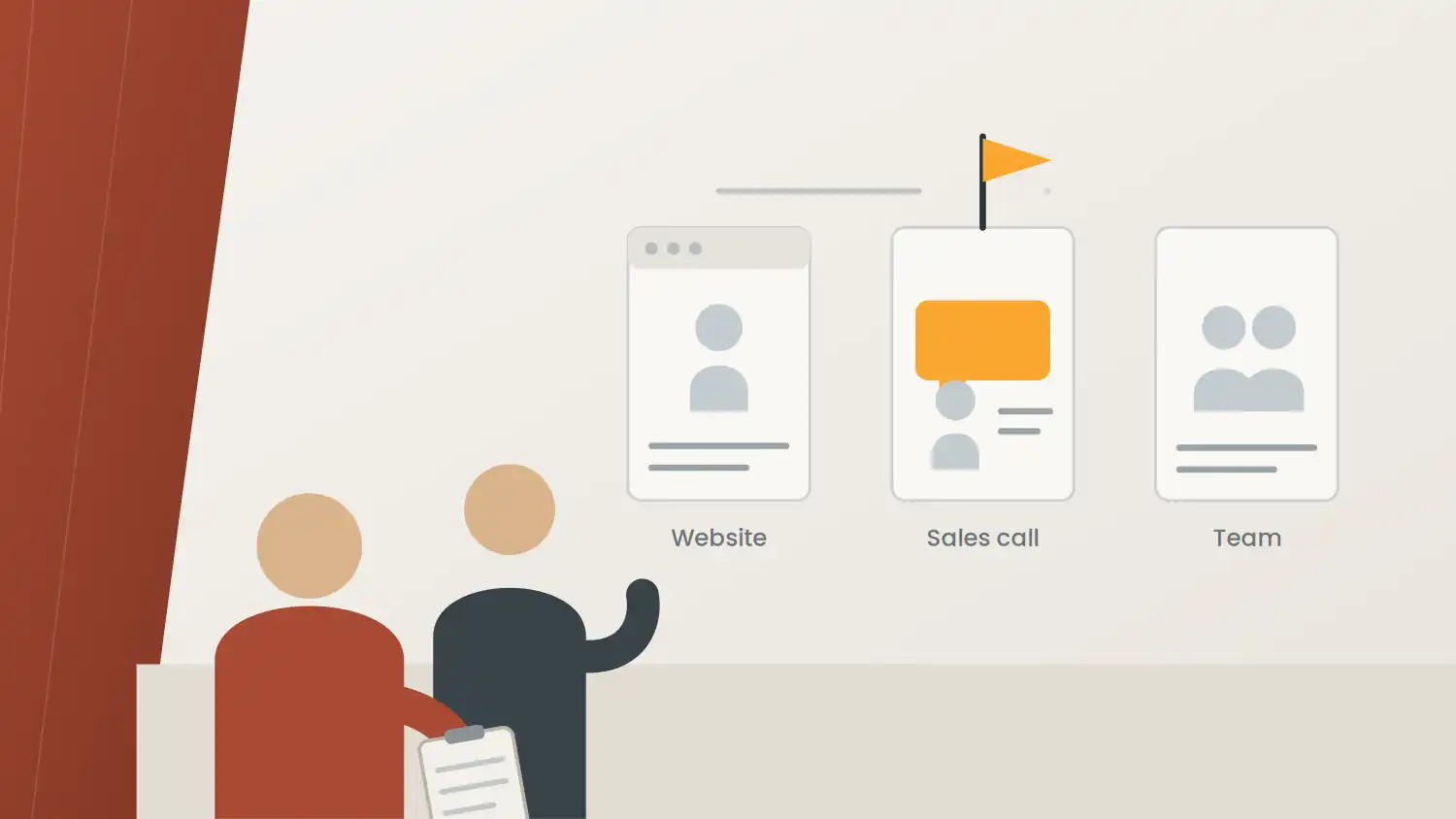
Here is the practical test. Picture a real sales call. The prospect raises an objection you have heard before. What helps you in that moment is not knowing they are a 42-year-old operations manager who enjoys cycling. What helps is knowing that companies like theirs usually stall at exactly this point, for exactly this reason, and that the sentence that unlocks it is the one your last three customers used themselves.
That is the ideal customer profile doing its job. The persona, meanwhile, is on a slide in a deck, looking friendly and changing nothing. A persona tells you who someone is. An ideal customer profile tells you why they buy, and only the second one is any use when money is on the table.
The same split shows up the moment you hand the work to an AI tool. Give a tool a persona and it writes demographic filler: confident, fluent, and generic, because demographics are all it was given. Give the same tool an ideal customer profile, with the real trigger and the buyer’s own language in it, and it writes something that names the problem out loud. The tool did not get smarter. The brief did. AI delivers the draft either way. What you decide to put in front of it is what makes the draft usable.
A persona tells you who your customer is. An ideal customer profile tells you why they buy. Only one of those helps you sell.
How to Build a One-Page B2B Ideal Customer Profile
You do not need a research budget. You need your own best customers and an afternoon. Pull your ten to twenty strongest accounts, the ones that closed cleanly, stayed, and referred others, and write down five things for each.
- The fit. What kind of company are they: size, sector, and situation, not just industry.
- The trigger. What changed in their world the week they started looking for a fix.
- The problem, in their words. The exact phrases they used, copied, not paraphrased.
- The decision. Who else was involved, and what nearly stopped the deal.
- The reason they chose you. The one thing they say when you ask why they stayed.
Look for the pattern that repeats, and write it on a single page. That page is your ideal customer profile, and it becomes the brief for every campaign, every landing page, and every AI prompt from then on. If you have not done the listening step yet, start with how to find your target audience without guessing, then come back and shape what you find into this one page.
Key Takeaways
- A buyer persona is a semi-fictional character built mostly from demographics. An ideal customer profile is an evidence-based description of your best-fit buyer, built from real deals.
- The persona tells you who someone is. The ideal customer profile tells you why they buy. In a sales call, or an AI prompt, only the reason they buy changes what you say.
- Build a one-page B2B ideal customer profile from your ten to twenty best customers: their fit, their trigger, their problem in their words, who decides, and why they chose you. Point every campaign and tool at it.
FAQ
No. A buyer persona is a semi-fictional individual, usually built around demographics. An ideal customer profile is an evidence-based description of your best-fit buyer, focused on the problem and the buying decision. In business-to-business, the ideal customer profile often describes the company and the buyer together.
Most small business-to-business companies get more from one sharp ideal customer profile than from a set of personas. If you build both, build the ideal customer profile first, from real customers, and let it drive the persona rather than the other way around.
The company fit (size, sector, and situation), the trigger that made them start looking, the problem in their own words, who is involved in the decision, and why your best customers chose you over the alternative.
Yes, and this is where the ideal customer profile earns its keep. Given a real profile, an AI tool writes copy that names a real problem. Given only a persona, it writes demographic filler. The tool is only ever as specific as the brief you hand it.