Synopsis
Ask ten owners how to find your target audience and most will describe a persona they invented: an age, a job title, a set of favourite apps. It feels like progress and it is usually fiction. The better answer is that your real audience has already shown you who they are, in what they bought, what they walked away from, and the words they used on the first call.
This post gives you a method you can run this week, with no survey, no focus group, and no guessing. It shows you where the evidence already lives, what to write down, what to ignore, and the three signs that tell you when you have found the buyer worth building everything around.
Why “Just Define Your Target Audience” Advice Usually Fails
Most advice tells you to invent a persona. Give her a name, an age, a job title, a commute, a favourite app. It produces a tidy one-pager and a customer who does not exist. The method fails for one reason: it starts from imagination instead of evidence.
The people who have already paid you are the only proof you have of who actually buys. An invented persona quietly overrides that proof. You end up writing for a person you made up, then wondering why the real buyers, the ones whose money already cleared, do not seem to respond. Personas built before the research have a long history of leading teams confidently in the wrong direction. The fix is not a better imagination. It is to stop inventing and start reading.
Where the Evidence Already Lives
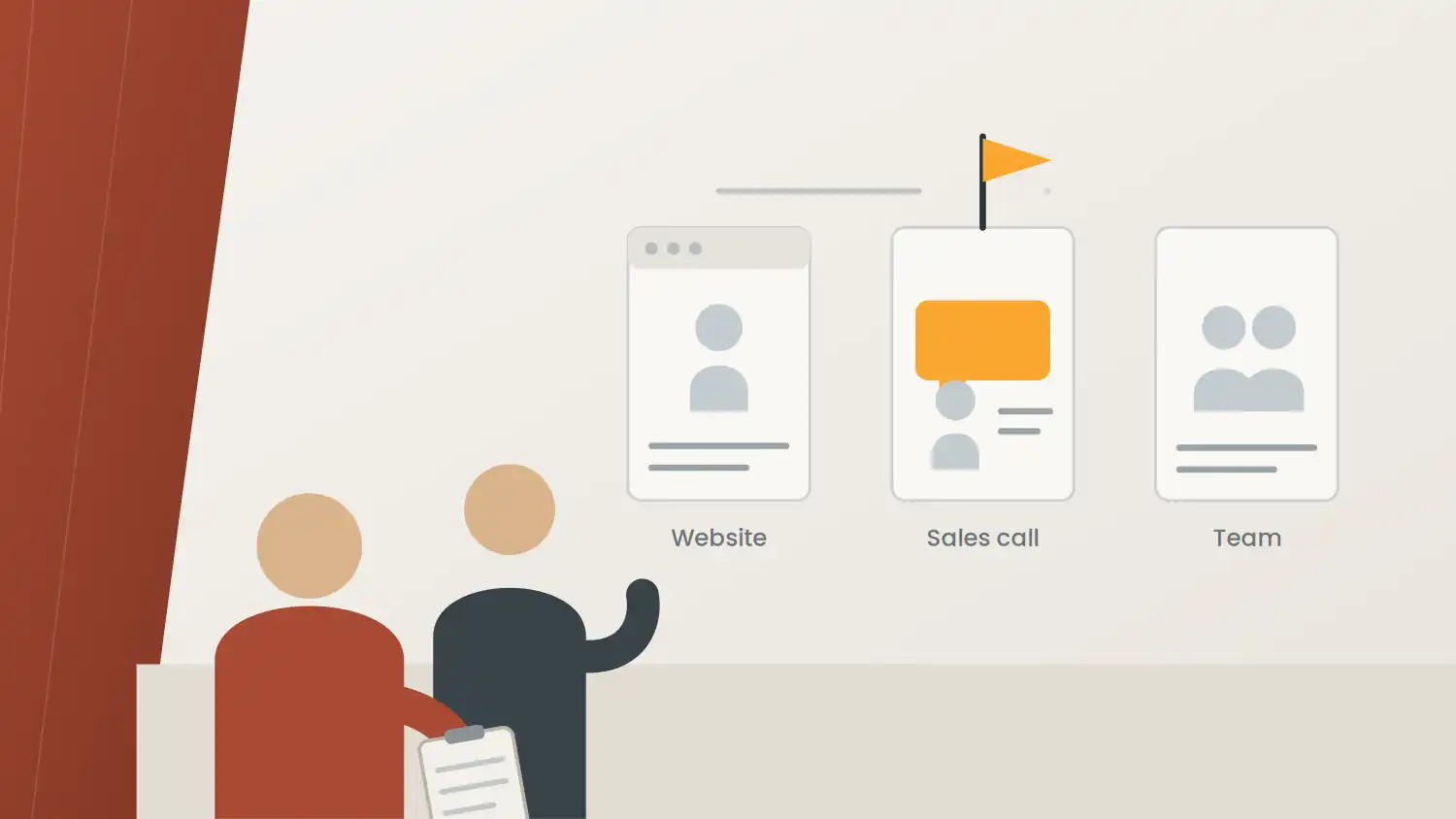
You have done more customer research than you think. You just filed it under “running the business” instead of “research”. It sits in four places, and none of them require a new tool to open.
- Your last twenty won deals. These show who says yes, and why. They are the closest thing you have to a definition of your customer.
- Your last ten lost deals. Just as useful. They show who you are not for, which is how you stop wasting money chasing the wrong buyer.
- Your support or sales inbox. This is where customers describe their problem in their own words, before anyone has coached them. Those words are the raw material of every headline you will ever write.
- Your onboarding notes or first-call recordings. These show what the buyer expected to change, which is the promise they actually bought.
That is your dataset. It is more honest than any survey, because nobody was performing for a researcher when they wrote it.
What to Write Down, and What to Ignore
Open the won deals first. For each one, write a single line answering one question: what was going wrong in their business the week they came looking? Not what you sold them. What was broken for them. Do the same for the lost deals, and note the moment they decided not to buy.
Ignore demographics for now. Age, company size, and industry feel like the answer, and they are almost never the thing that actually connects your best customers. What connects them is a shared problem and a shared trigger: the event that made them start looking on that particular Tuesday. Capture the trigger, the words they used, who signed, and what nearly stopped them. The pattern you are hunting is a repeated problem, not a repeated job title.
This is also the one place an AI tool earns its keep. If you have twenty call recordings or two hundred support emails, an AI tool can read all of them and surface the phrases that repeat, in an afternoon rather than a fortnight. That is worth doing. But notice the division of labour: the tool delivers the reading, and you decide which pattern matters. The reading is grunt work a machine is good at. The deciding is judgement, and it stays with you. Hand the deciding to the tool and you get a confident, well-written description of the wrong customer.
The Three Signs You Have Found the Real Buyer
When you sort the evidence, two or three kinds of buyer usually appear. One of them is clearly the best, and you will know it by three signs.
They close faster and argue about price less. When the problem is urgent and specific to them, the sale is a relief, not a negotiation. Long deliberation and hard haggling are often signs you are talking to someone the offer was never really for.
They stay longer and refer people like themselves. The right customer does not just buy once. They renew, and the friends they send you have the same problem, which is the clearest proof you have found a real segment and not a coincidence.
You can describe their problem before they finish the sentence. When you have read enough of the evidence, you can say the buyer’s problem back to them in their own words, and watch them relax because someone finally gets it.
When those three line up on one kind of buyer, stop looking. That is your target audience.
Your target audience is not who you want to sell to. It is who already buys, described in their own words.
The last step is to write it on one page: the buyer, their problem, their trigger, and the exact phrases they use. That one page is what marketers call an ideal customer profile, and it is the thing every ad, email, and AI prompt should be pointed at from then on. It is the same decision behind why most marketing fails before the first post goes out: the work is not more output, it is deciding who the output is for.
Key Takeaways
- You do not find your target audience by inventing a persona. You find it in the customers who already paid you, described in their own words.
- The evidence is already yours: your last twenty won deals, your last ten lost deals, and your support inbox. Write down the problem each buyer had and the trigger that made them look, not their job title.
- You have found the real buyer when one kind of customer closes faster, stays longer, and describes the problem the way you would. Write it on one page and point all of your marketing at it.
FAQ
A target audience is the broad group you are trying to reach. An ideal customer profile is the specific, evidence-based description of the single best buyer inside that group: their problem, their trigger, and the words they use. The audience is who might listen. The profile is who you build everything around.
Use the closest evidence you have: the people who took a sales call, the ones who asked for a quote and did not buy, and the reviews of competing products. When you have little data of your own, borrow from the market and note the exact complaints customers make about the alternatives. A short list of real quotes beats a detailed invented persona every time.
Yes, for the reading, not the deciding. An AI tool can scan hundreds of support emails or call transcripts and surface the phrases that repeat. It cannot tell you which of those patterns is the buyer worth building around. That judgement is yours, and it is the part that actually matters.
Once a quarter is enough for most growing companies, plus any time your best new customers stop looking like your old ones. If the deals you are winning have started to change shape, your description is out of date, and your marketing will quietly drift with it.